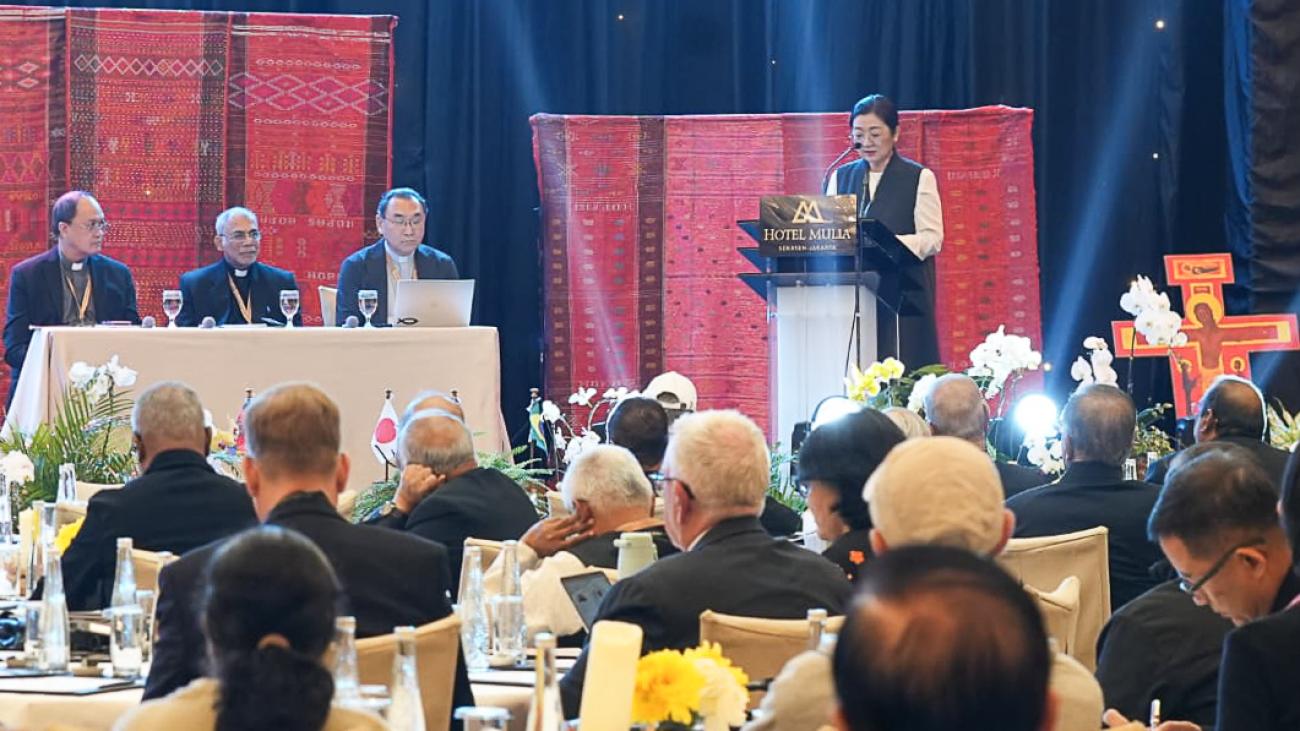
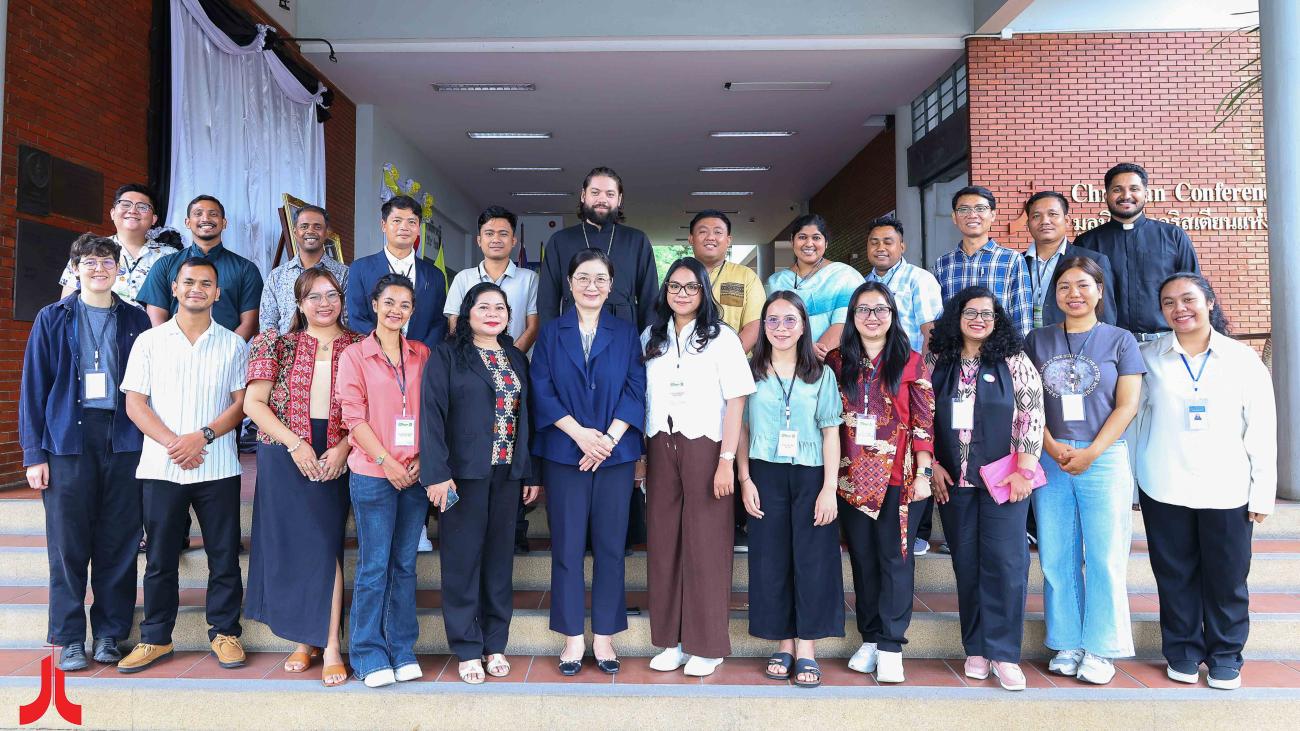
Representatives of international ecumenical and mission organisations examine changing ecclesial landscape and the future of the ecumenical movement
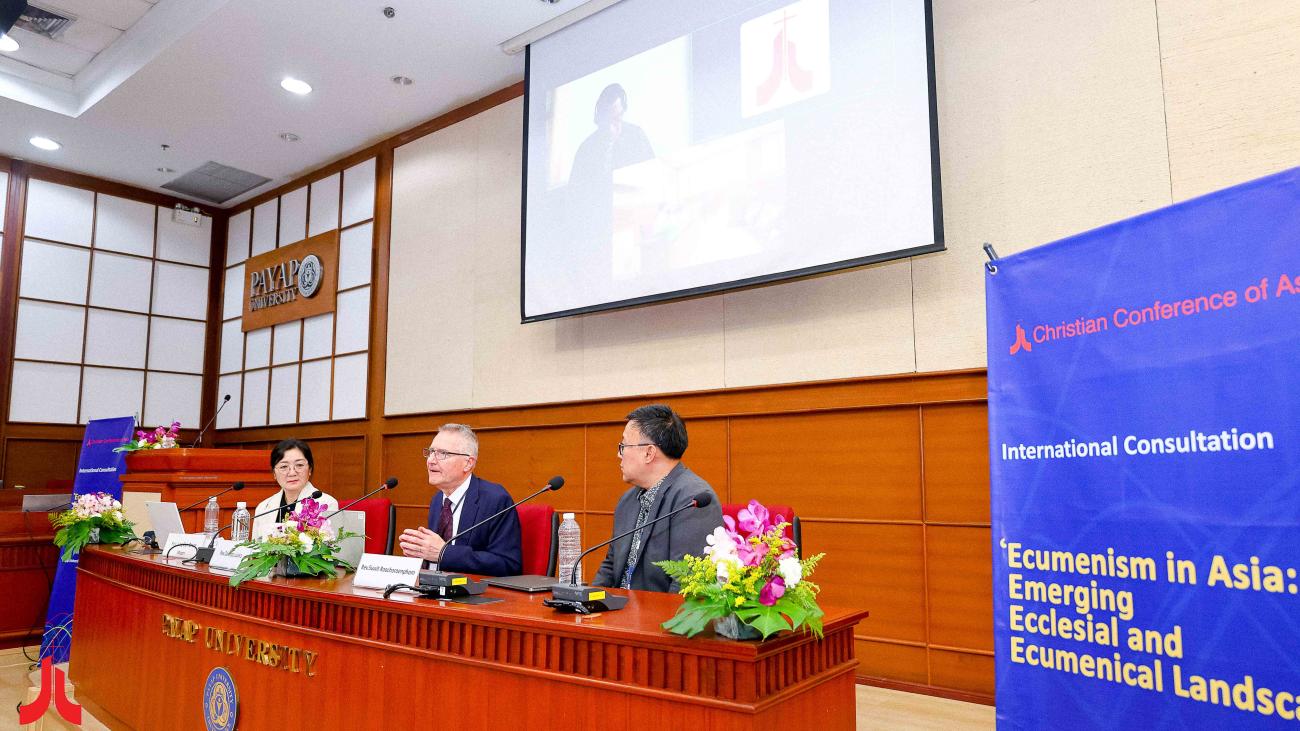
Chiang Mai, Thailand: Three representatives of ecumenical, evangelical and mission organisations addressing the theme “Changing Landscape of the Global Ecumenical Movement in the 21st Century: Prospects and Challenges”, analysed polycentric mission and relational forms of ecumenism, fragmentation of churches, and the growing importance of collaboration across traditions, regions, and mission contexts.
Rev. Dr Kenneth Mtata, Programme Director for Life, Justice, and Peace of the World Council of Churches (WCC), who joined the international consultation virtually, emphasised that the ecumenical movement is far broader than formal organisations, describing it as a Spirit-led movement expressed through Christian unity, common witness, and shared service. While acknowledging the historic role of institutional ecumenism, he highlighted that the movement is undergoing a profound transformation rather than decline.
Dr Mtata noted a shift from a predominantly Western, institutional, and doctrinal model towards a more polycentric, grassroots, and action-oriented ecumenism. Today, ecumenical engagement extends beyond theological dialogue to encompass justice, climate action, migration, peacebuilding, humanitarian service, youth engagement, and digital networks.
He underscored the growing influence of churches in Asia, Africa, and Latin America as a source of new theological perspectives and ecumenical energy. At the same time, he pointed to challenges including the growing gap between the demographic centre of Christianity and the distribution of ecumenical resources and influence, difficulties integrating pentecostal and evangelical communities, and questions about the coherence and future direction of the ecumenical movement.
Rev. Dr Mtata called for stronger connections between local, regional, and global expressions of ecumenism, while encouraging churches to deepen their common witness in addressing global challenges such as war, climate injustice, and human suffering.
Rev. Dr Risto Jukko, Global Mission Director of the Evangelical Lutheran Church of Finland, highlighted how the shift towards polycentric mission is reshaping global Christianity. He noted that the growth of pentecostal, charismatic, evangelical, and independent churches, has challenged traditional assumptions about authority, leadership, and mission.
While churches and mission agencies in the Global North continue to hold significant resources, Rev. Dr. Jukko noted that Christianity's demographic centre has shifted southward. He said that mission is increasingly understood as “from everywhere to everywhere,” requiring churches to embrace partnership, mutual learning, and shared responsibility in responding to contemporary challenges. These include migration, digitalisation and artificial intelligence, interfaith relations, climate change, economic inequality, and political conflict.
Rev. Dr. Jukko observed that as traditional mission societies face declining resources and influence, institutional forms of ecumenism are increasingly being complemented by relational approaches centred on shared spirituality, common witness, and mutual accountability. Rev. Dr Jukko concluded that the future of ecumenical mission lies in collaborative partnerships that embody Christian unity through evangelism, service, justice, and participation in God’s mission in the world.
Rev. Dr Suwit Raocharoenphom, General Secretary of the Evangelical Alliance of Thailand, touched on the challenge of church fragmentation in Thailand and the lessons it offers for the wider Asian church.
Describing the situation as the “paradox of Protestant fragmentation”, Rev. Dr Raocharoenphom noted that although churches shared the same faith, Lord, and mission, diverse missionary traditions, denominational identities, and separate ministry structures often fostered mistrust, competition, and isolation rather than cooperation. He argued that fragmentation stemmed less from theological differences than from relational wounds, fear, and a lack of trust.
A turning point came when church leaders shifted their focus from growing individual churches to advancing God’s Kingdom, gradually rebuilding trust through prayer, dialogue, and shared service and opening new opportunities for collaboration.
Drawing lessons from Thailand’s experience, Rev. Dr Raocharoenphom emphasised that unity does not require uniformity. Churches learned to distinguish between essential beliefs and secondary differences, allowing them to cooperate without sacrificing their identities. He identified relational trust, a Kingdom-centred vision, acceptance of diversity, collaborative structures, and leadership development as key foundations for sustainable unity.
The session was moderated by Rev. Jung Eun Grace Moon, Programme Coordinator and General Secretary-elect of the CCA.
The biblical-theological reflections shared on two days served as a theological compass, shaping the discussions and discernment that followed.
Prof. Dr Naw Eh Tar Gay, President of the Myanmar Institute of Theology (MIT), reflected on Christian resilience through 2 Corinthians 4:7–9. She emphasised that believers, though fragile like “jars of clay,” are sustained by God’s power and grace.
Drawing on Paul’s example and the symbol of Pyit Tine Htaung, a traditional tumbling doll, she explained that resilience is rooted in faith, the Holy Spirit, hope in Christ, and supportive community. In the context of Myanmar’s ongoing conflict, displacement, and hardship, she affirmed that Christians continue to rise, serve others, and bear witness to God’s renewing presence, trusting that suffering is never the final word.
Rev. Ka Fai (Ray) Wong, General Secretary of the Hong Kong Council of the Church of Christ in China (HKCCCC) and a member of the WCC Central Committee, led the biblical theological reflection on the third day, using the biblical symbolism of stones to explore the challenges and opportunities facing churches in Asia.
Through images of suffering, refuge, and renewal, Rev. Wong encouraged churches to respond to social change and uncertainty with resilience, faithful witness, and hope.
Referring to Christ as the cornerstone and believers as “living stones,” Rev. Wong underscored the Church’s calling to be a community of healing, reconciliation, and compassion amid conflict, fragmentation, and displacement. Using Hong Kong as a case study, he pointed to the need for churches to remain steadfast sources of hope and guidance while embodying God’s peace, justice, and love in a rapidly changing world.