CCA General Secretary reaffirms commitment to ecumenical collaboration at FABC Twelfth Plenary Assembly
Programme Review and Programme Direction

Two key deliberative sessions during the 15th CCA General Assembly are the Programme Review and Programme Direction sessions.

The Programme Review and Programme Direction sessions will both be conducted in three groups relating to the CCA’s programme areas, namely, (i) General Secretariat (GS), (ii) Mission in Unity and Contextual Theology (MU) and Ecumenical Leadership Formation and Spirituality (EF); and (iii) Building Peace and Moving Beyond Conflicts (BP) and Prophetic Diakonia (PD).

Assembly participants will have the option to join one of three groups for both the Programme Review and Programme Direction sessions. For the sake of coherence, the assigned group will remain the same for both sessions.

General Secretariat

The General Secretariat oversees the coordination of programmatic, administrative, and financial activities of the organization. The GS comprises various departments such as church and ecumenical relations, relations with ecumenical partners, finance, administration, and communications, which provide crucial support and services for the implementation of programs and contribute to the overall functioning of the CCA.

Programmes: Relations with member churches and councils, ecumenical partners; advocacy at the United Nations; ecumenical responses to emerging issues in solidarity; income development and finance; and communications.

Mission in Unity and Contextual Theology (MU) and Ecumenical Leadership Formation and Spirituality (EF)

Under the MU programme area, the CCA accompanies Asian churches to strengthen their mission and witness in multi-religious contexts, revitalise and nurture church unity and the Asian ecumenical movement, and develop contextual theological foundations.

Programmes: Asian Movement for Christian Unity (AMCU); Congress of Asian Theologians (CATS); Asian women doing theology in the context of wider ecumenism; contextualisation of theology in Asia and ecumenical theological education.

The EF programme area focuses on nurturing and developing ecumenical leaders in Asia. The programme aims to enhance spiritual formation and theological understanding, enabling people to actively engage in ecumenical dialogue and collaboration.

Programmes: Ecumenical Enablers’ Training in Asia (EETA); Asian Ecumenical Institute (AEI); Youth and Women Leadership Development; Ecumenical Spirituality and Nurturing of Contextual Liturgical Traditions; Asia Sunday

Building Peace and Moving Beyond Conflicts (BP) and Prophetic Diakonia and Advocacy (PD)

The BP programme area is dedicated to promoting peace, justice, and reconciliation in Asia’s diverse contexts. Through training, advocacy, and dialogue, the programme addresses the root causes of conflicts, empowers communities, and fosters sustainable peacebuilding initiatives.

Programmes: Pastoral Solidarity Visits; Churches in Action for Moving Beyond Conflict and Resolution; Young Ambassadors of Peace in Asia (YAPA); Ecumenical Women’s Action Against Violence (EWAAV); Eco-Justice for Sustainable Peace in the Oikos.

The PD programme area focuses on promoting justice, human rights, and social transformation in Asia. Through advocacy, capacity-building, and raising awareness, the programme addresses systemic injustice, empowers marginalised communities, and advocates for prophetic actions and meaningful change.

Programmes: Human Rights advocacy; Migration, Statelessness, and Trafficking in Persons; Asian Ecumenical Disability Advocacy Network; Asian Advocacy Network on the Dignity and Rights of Children (AANDRoC); Ecumenical Solidarity Accompaniment and Diakonia in Asia (ESADA); Health and Healing; Good Governance; Action Together to Combat HIV and AIDS in Asia (ATCHAA).

No preference updated.

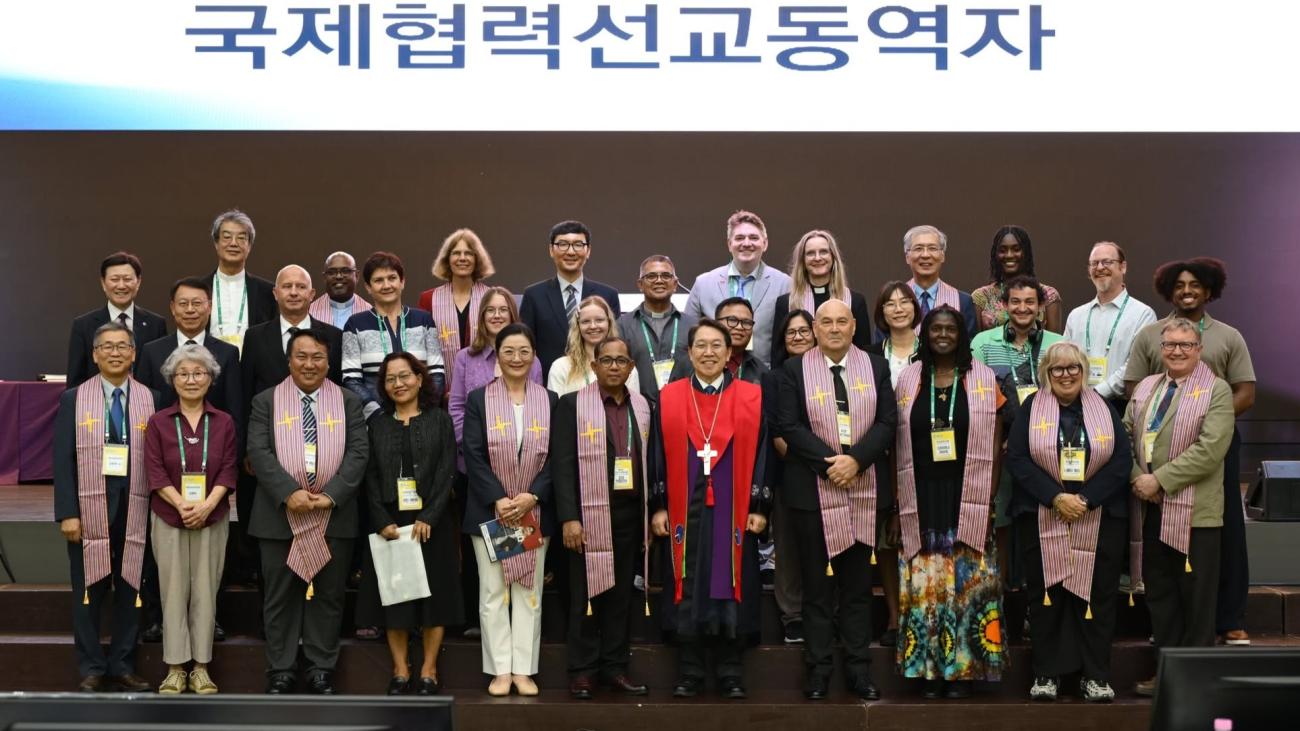
    Photo credit: FABC

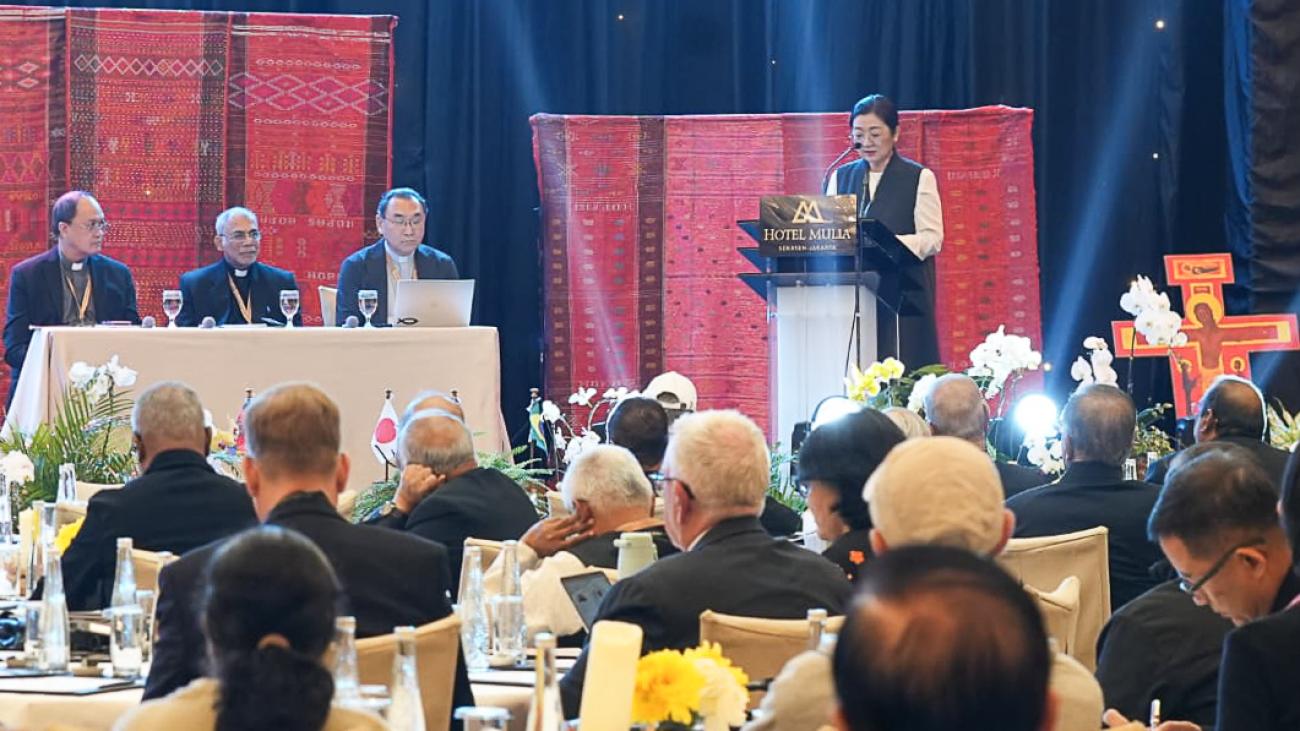
    Jakarta, Indonesia: Reaffirming the Christian Conference of Asia's (CCA) commitment to deeper ecumenical collaboration and common witness in Asia, General Secretary Rev. Jung Eun Grace Moon delivered greetings at the opening of the Federation of Asian Bishops' Conferences' (FABC) Twelfth Plenary Assembly in Jakarta, Indonesia, on 21 July 2026.

    In her congratulatory message, Rev. Moon expressed deep appreciation for the FABC’s longstanding commitment to synodality and its efforts to foster a more participatory, transparent, and mission-oriented Church in Asia.

    “The Christian Conference of Asia stands in solidarity with the FABC in this journey. We share a common calling to witness to Christ’s love, to work for justice and peace, and to accompany the people of Asia in their hopes and struggles. Together, we are invited to deepen our collaboration, strengthen our communion, and contribute to the building of a more just, compassionate, and reconciled world,” said Rev. Moon.

    The CCA General Secretary also commended the FABC’s efforts to integrate synodal practices with Asia’s rich traditions of contemplation, listening, and communal discernment, noting that the Church in Asia has much to contribute to the universal Church.

    “We are encouraged by your commitment to move beyond reflection to concrete pastoral action. The emphasis on prayerful listening—to the realities of Asia, to one another, and to the voice of the Spirit—offers a path towards a more responsive and mission-oriented Church. In a region marked by diversity, complexity, and many challenges, such a synodal approach is not only relevant but necessary,” she stated.

    The CCA and the FABC have maintained close ties over the years, collaborating in a range of ecumenical, theological, and regional initiatives, including the Asian Committee for People’s Organisation (ACPO), the Ecumenical Coalition on Third World Tourism, the Asian Movement for Christian Unity (AMCU), the Asia Conference of Theology Students (ACTS), and the Congress of Asian Theologians (CATS). In June 2026, Archbishop Felix Machado attended CCA’s International Consultation on Ecumenism in Asia: Emerging Ecclesial and Ecumenical Landscapes, and delivered a presentation on “Synodality and Ecumenism”.

    The Twelfth Plenary Assembly, being held from 20 to 27 July 2026, is the highest decision-making body of the FABC and convenes every four years. Guided by the theme, “The Call to Synodal Conversion and the Mission to be Bridges and Bridge-builders in Asia,” the assembly focuses on the practical implementation of the synodal vision in the life and mission of the Church in Asia.