Month-long Asian Ecumenical Institute 2026 set to begin
Programme Review and Programme Direction

Two key deliberative sessions during the 15th CCA General Assembly are the Programme Review and Programme Direction sessions.

The Programme Review and Programme Direction sessions will both be conducted in three groups relating to the CCA’s programme areas, namely, (i) General Secretariat (GS), (ii) Mission in Unity and Contextual Theology (MU) and Ecumenical Leadership Formation and Spirituality (EF); and (iii) Building Peace and Moving Beyond Conflicts (BP) and Prophetic Diakonia (PD).

Assembly participants will have the option to join one of three groups for both the Programme Review and Programme Direction sessions. For the sake of coherence, the assigned group will remain the same for both sessions.

General Secretariat

The General Secretariat oversees the coordination of programmatic, administrative, and financial activities of the organization. The GS comprises various departments such as church and ecumenical relations, relations with ecumenical partners, finance, administration, and communications, which provide crucial support and services for the implementation of programs and contribute to the overall functioning of the CCA.

Programmes: Relations with member churches and councils, ecumenical partners; advocacy at the United Nations; ecumenical responses to emerging issues in solidarity; income development and finance; and communications.

Mission in Unity and Contextual Theology (MU) and Ecumenical Leadership Formation and Spirituality (EF)

Under the MU programme area, the CCA accompanies Asian churches to strengthen their mission and witness in multi-religious contexts, revitalise and nurture church unity and the Asian ecumenical movement, and develop contextual theological foundations.

Programmes: Asian Movement for Christian Unity (AMCU); Congress of Asian Theologians (CATS); Asian women doing theology in the context of wider ecumenism; contextualisation of theology in Asia and ecumenical theological education.

The EF programme area focuses on nurturing and developing ecumenical leaders in Asia. The programme aims to enhance spiritual formation and theological understanding, enabling people to actively engage in ecumenical dialogue and collaboration.

Programmes: Ecumenical Enablers’ Training in Asia (EETA); Asian Ecumenical Institute (AEI); Youth and Women Leadership Development; Ecumenical Spirituality and Nurturing of Contextual Liturgical Traditions; Asia Sunday

Building Peace and Moving Beyond Conflicts (BP) and Prophetic Diakonia and Advocacy (PD)

The BP programme area is dedicated to promoting peace, justice, and reconciliation in Asia’s diverse contexts. Through training, advocacy, and dialogue, the programme addresses the root causes of conflicts, empowers communities, and fosters sustainable peacebuilding initiatives.

Programmes: Pastoral Solidarity Visits; Churches in Action for Moving Beyond Conflict and Resolution; Young Ambassadors of Peace in Asia (YAPA); Ecumenical Women’s Action Against Violence (EWAAV); Eco-Justice for Sustainable Peace in the Oikos.

The PD programme area focuses on promoting justice, human rights, and social transformation in Asia. Through advocacy, capacity-building, and raising awareness, the programme addresses systemic injustice, empowers marginalised communities, and advocates for prophetic actions and meaningful change.

Programmes: Human Rights advocacy; Migration, Statelessness, and Trafficking in Persons; Asian Ecumenical Disability Advocacy Network; Asian Advocacy Network on the Dignity and Rights of Children (AANDRoC); Ecumenical Solidarity Accompaniment and Diakonia in Asia (ESADA); Health and Healing; Good Governance; Action Together to Combat HIV and AIDS in Asia (ATCHAA).

No preference updated.

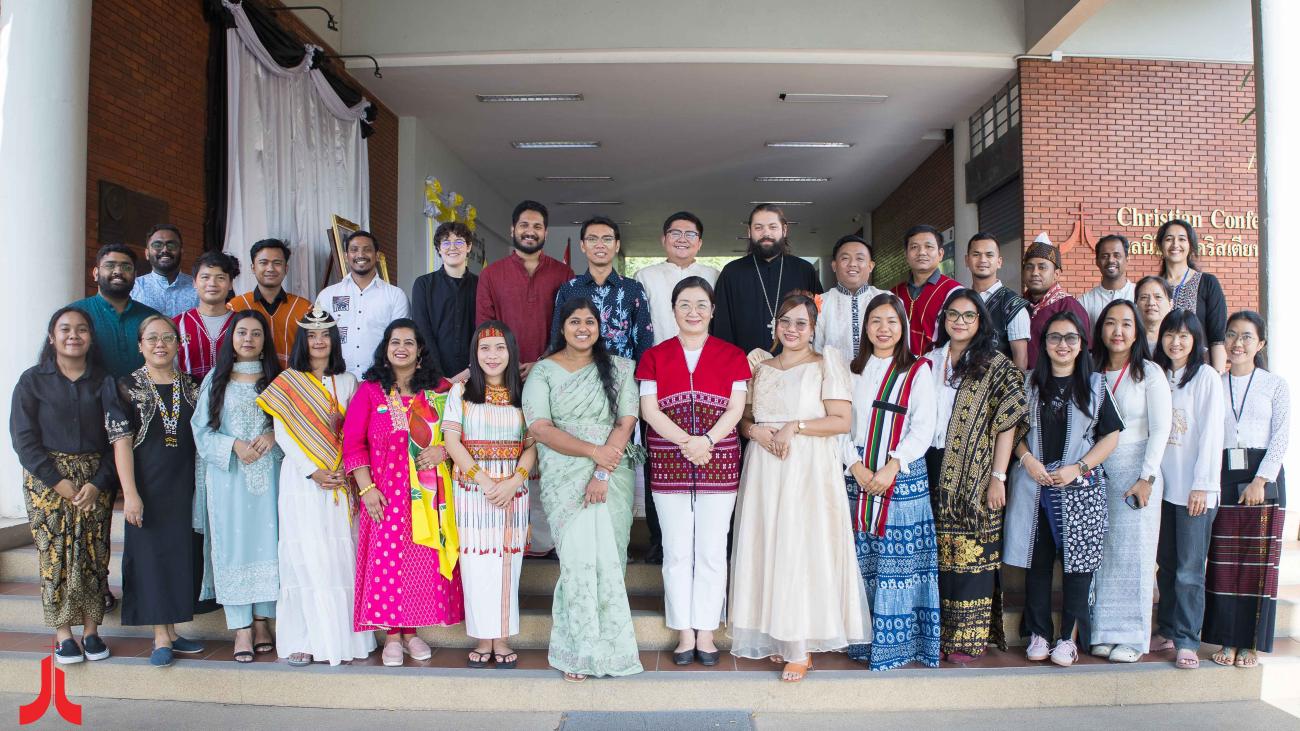
    Chiang Mai, Thailand: The Asian Ecumenical Institute (AEI) 2026, the Christian Conference of Asia’s (CCA) annual month-long ecumenical formation and leadership development programme, is set to commence on 6 July 2026.

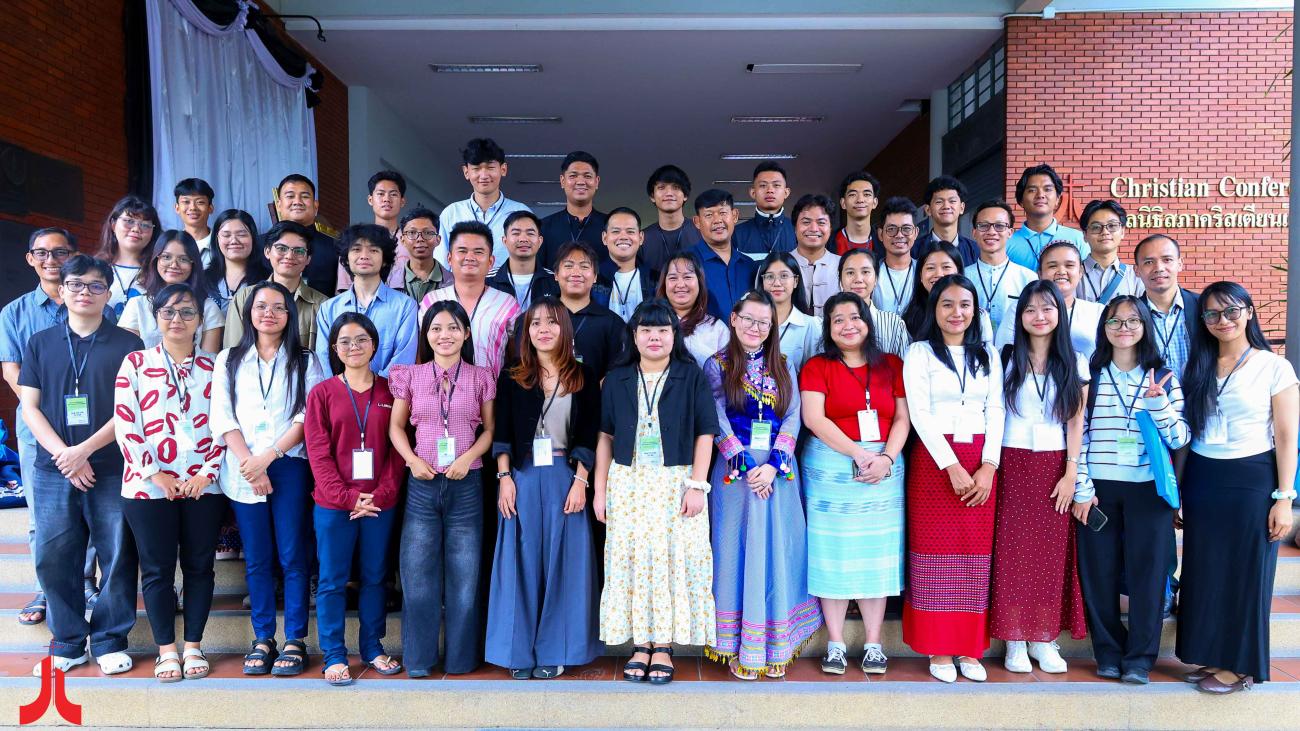
    Taking place from 6 to 31 July 2026 at the CCA headquarters in Chiang Mai, Thailand, AEI 2026 will bring together 24 young ecumenical leaders from diverse church traditions and national contexts for immersive learning, theological reflection, and ecumenical engagement.

    The theme for AEI 2026 “Hope for Liberation Amidst the Groaning of Creation” (Romans 8:19–21) invites participants to engage in a shared and in-depth reflection on the suffering of creation, particularly within the Asian context. The programme will explore creation's groaning under the bondage of decay and examine how this groaning is manifested in social, economic, ecological, and spiritual realities, while pointing towards the Christian hope that proclaims the liberation and renewal of all creation.

    Throughout the month-long institute, participants will engage critically with issues at the forefront of church and society. Academic sessions will explore biblical visions of liberation and hope; ecological justice and climate challenges; Christian unity and ecumenical witness in Asia; ecumenical diakonia; peacebuilding in the context of geopolitics and religious nationalism; unity in a polarised and fragmented world; interfaith dialogue and action; feminist and liberative approaches to Scripture; decolonising mission; ethics of alterity and unity-in-diversity; artificial intelligence and faith; theology, worship and social engagement; prophetic witness amid crisis and suffering; and the church's role in mental health care, support and wellbeing.

    In addition to classroom-based learning and discussions, participants will engage with Thailand’s religious landscape through visits to interreligious centres and conversations with religious leaders. They will also attend Sunday worship services across different Christian traditions, experiencing the richness and diversity of ecclesial life in Thailand.

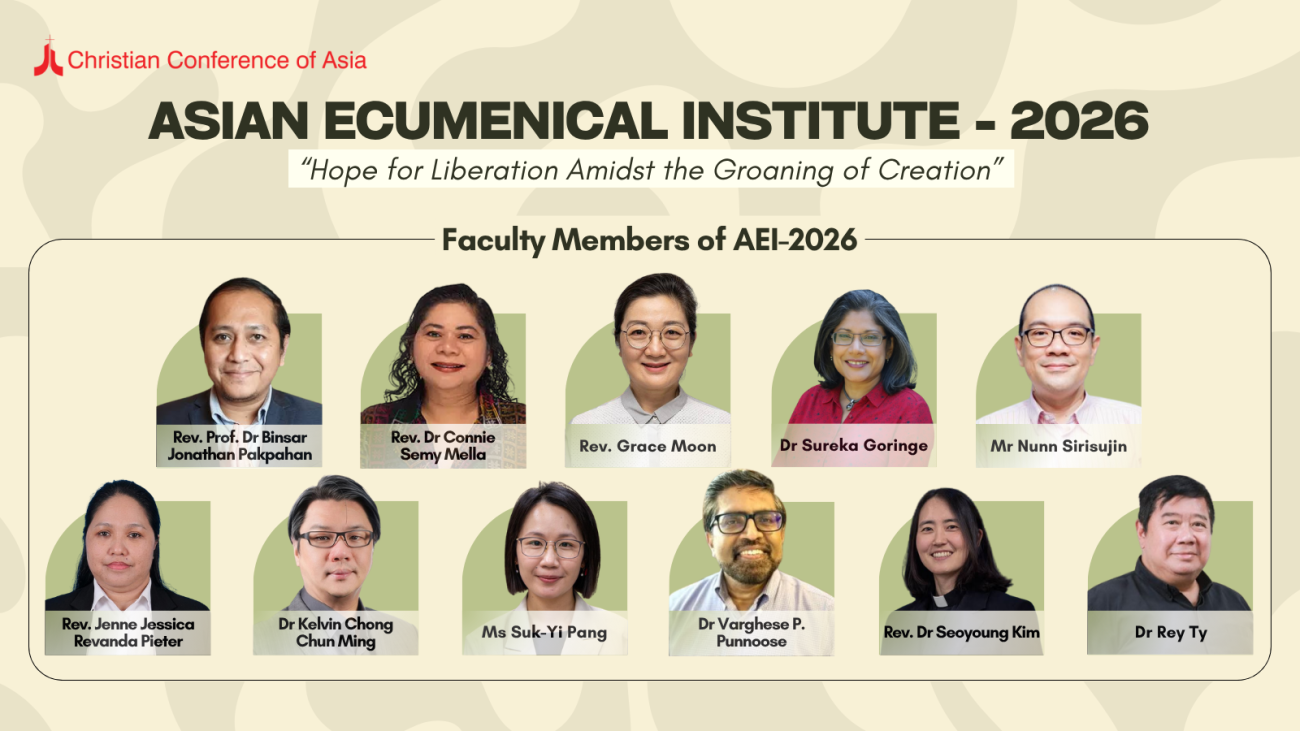
    The faculty for AEI 2026 comprises renowned theologians, biblical scholars, ecumenical leaders and practitioners from across Asia. Distinguished faculty members include Rev. Dr Connie Semy Mella (Philippines), Professor of Old Testament at Union Theological Seminary, Philippines; Rev. Prof. Dr Binsar Jonathan Pakpahan (Indonesia), Professor of Philosophy, Ethics, and Public Theology at Sekolah Tinggi Filsafat Theologi Jakarta; Dr Kelvin Chong Chun Ming (Singapore), Assistant Professor of Systematic Theology at Singapore Bible College; Mr Nunn Sirisujin (Thailand), Adjunct Professor at McGilvary College of Divinity, Chiang Mai; Dr Rey Ty (Philippines), Director of the Religion, Culture, and Peace Lab at Payap University, Chiang Mai; Rev. Dr Seoyoung Kim (Republic of Korea), Lecturer in Applied Theology at Belfast School of Theology, Northern Ireland; Rev. Jenne Jessica Revanda Pieter (Indonesia), Lecturer at the Faculty of Theology, Universitas Kristen Indonesia Maluku (UKIM); Ms Suk-Yi Pang (Hong Kong), Director of Ecumenical Relations and Executive Secretary of the Hong Kong Christian Council; Dr Sureka Goringe (Australia), National Director of UnitingWorld; Dr Varghese P. Punnoose (India), General Secretary of the National Alliance of Mental Health India; and Rev. Jung Eun Grace Moon (Republic of Korea), General Secretary of the Christian Conference of Asia.