Sixth leadership training workshop for theological educators of Bible schools based in Mae Sot refugee camps
Programme Review and Programme Direction

Two key deliberative sessions during the 15th CCA General Assembly are the Programme Review and Programme Direction sessions.

The Programme Review and Programme Direction sessions will both be conducted in three groups relating to the CCA’s programme areas, namely, (i) General Secretariat (GS), (ii) Mission in Unity and Contextual Theology (MU) and Ecumenical Leadership Formation and Spirituality (EF); and (iii) Building Peace and Moving Beyond Conflicts (BP) and Prophetic Diakonia (PD).

Assembly participants will have the option to join one of three groups for both the Programme Review and Programme Direction sessions. For the sake of coherence, the assigned group will remain the same for both sessions.

General Secretariat

The General Secretariat oversees the coordination of programmatic, administrative, and financial activities of the organization. The GS comprises various departments such as church and ecumenical relations, relations with ecumenical partners, finance, administration, and communications, which provide crucial support and services for the implementation of programs and contribute to the overall functioning of the CCA.

Programmes: Relations with member churches and councils, ecumenical partners; advocacy at the United Nations; ecumenical responses to emerging issues in solidarity; income development and finance; and communications.

Mission in Unity and Contextual Theology (MU) and Ecumenical Leadership Formation and Spirituality (EF)

Under the MU programme area, the CCA accompanies Asian churches to strengthen their mission and witness in multi-religious contexts, revitalise and nurture church unity and the Asian ecumenical movement, and develop contextual theological foundations.

Programmes: Asian Movement for Christian Unity (AMCU); Congress of Asian Theologians (CATS); Asian women doing theology in the context of wider ecumenism; contextualisation of theology in Asia and ecumenical theological education.

The EF programme area focuses on nurturing and developing ecumenical leaders in Asia. The programme aims to enhance spiritual formation and theological understanding, enabling people to actively engage in ecumenical dialogue and collaboration.

Programmes: Ecumenical Enablers’ Training in Asia (EETA); Asian Ecumenical Institute (AEI); Youth and Women Leadership Development; Ecumenical Spirituality and Nurturing of Contextual Liturgical Traditions; Asia Sunday

Building Peace and Moving Beyond Conflicts (BP) and Prophetic Diakonia and Advocacy (PD)

The BP programme area is dedicated to promoting peace, justice, and reconciliation in Asia’s diverse contexts. Through training, advocacy, and dialogue, the programme addresses the root causes of conflicts, empowers communities, and fosters sustainable peacebuilding initiatives.

Programmes: Pastoral Solidarity Visits; Churches in Action for Moving Beyond Conflict and Resolution; Young Ambassadors of Peace in Asia (YAPA); Ecumenical Women’s Action Against Violence (EWAAV); Eco-Justice for Sustainable Peace in the Oikos.

The PD programme area focuses on promoting justice, human rights, and social transformation in Asia. Through advocacy, capacity-building, and raising awareness, the programme addresses systemic injustice, empowers marginalised communities, and advocates for prophetic actions and meaningful change.

Programmes: Human Rights advocacy; Migration, Statelessness, and Trafficking in Persons; Asian Ecumenical Disability Advocacy Network; Asian Advocacy Network on the Dignity and Rights of Children (AANDRoC); Ecumenical Solidarity Accompaniment and Diakonia in Asia (ESADA); Health and Healing; Good Governance; Action Together to Combat HIV and AIDS in Asia (ATCHAA).

No preference updated.

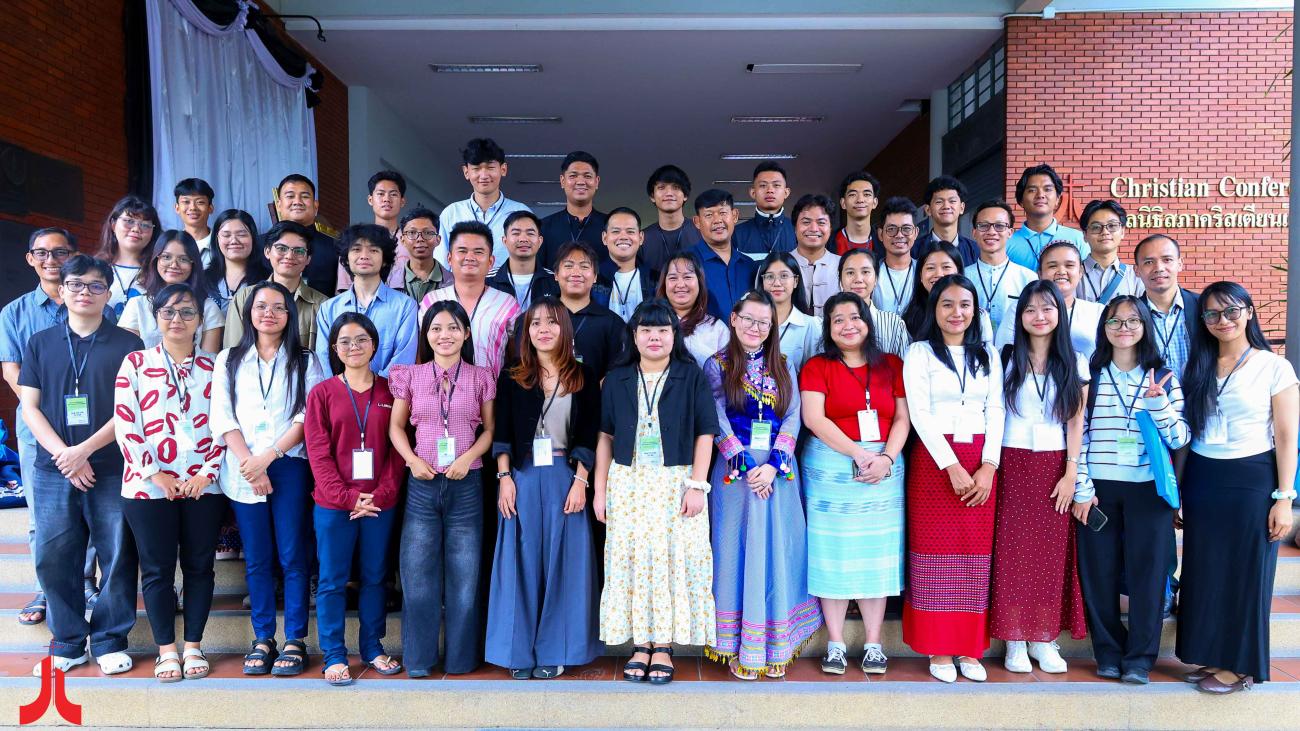
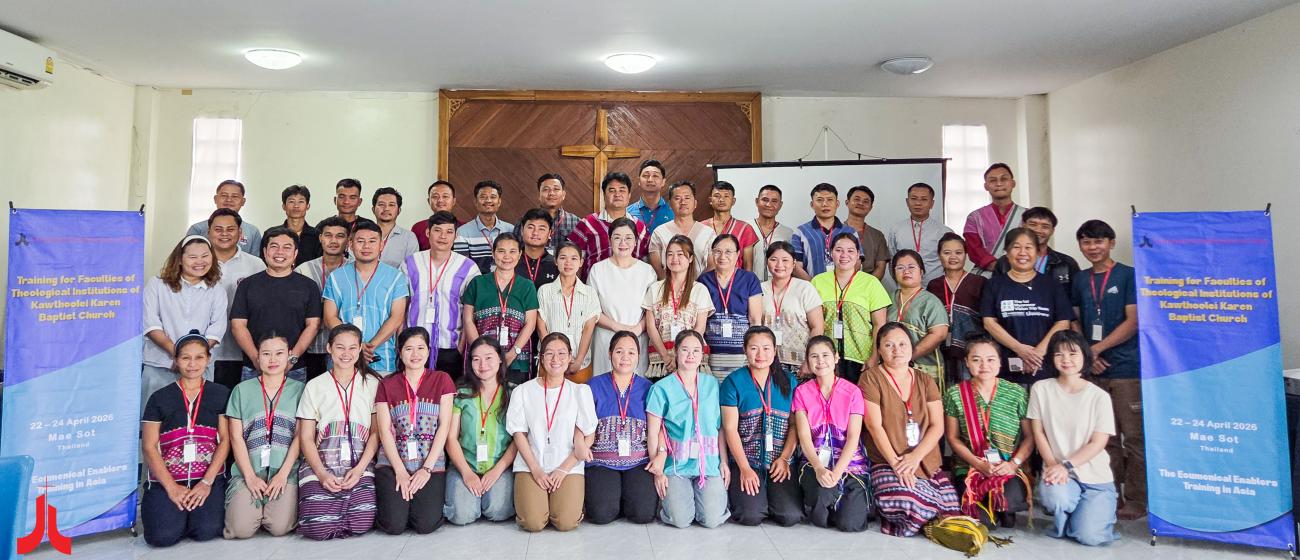
    Mae Sot, Thailand: The Christian Conference of Asia (CCA) conducted a three-day training for faculty members of Kawthoolei Karen Baptist Church (KKBC) theological institutions located inside refugee camps in Mae Sot along the Thailand–Myanmar border.

    Fifty-two participants from nine theological institutions attended the sixth training held from 22 to 24 April 2026.

    Organised annually as part of the Ecumenical Enablers’ Training in Asia (EETA) programme of CCA, which focuses on nurturing ecumenical formation at the grassroots level, the thematic focus of this year’s training was ecumenical leadership formation with an emphasis on equipping educators to nurture and guide Karen youth in local congregations.

    During the session on “Building Effective Leadership,” Rev. Dr Saw Wado, President of Hope Karen Theological Seminary, underscored the transformative role of education in shaping future leaders. He noted that while division and conflict have marked parts of Karen history, they need not define the future. Rather, “education can empower communities to rediscover their strength, nurture unity, and inspire a new generation of leaders in local congregations.”

    Rev. Jung Eun Grace Moon, CCA Programme Coordinator, highlighted three core elements of leadership development: empowerment, encouragement, and engagement. She emphasised the importance of cultivating leadership skills that inspire others, foster shared responsibility, and strengthen community bonds through active participation and service.
      
    The General Secretary of KKBC, Rev. Dr Peacefully Thomas, presented the church’s ministries, including evangelism, education, youth and women’s formation, and community development, reaffirming KKBC’s commitment to supporting displaced Karen communities while preserving their identity and faith.

    Thra Htee Toh, Chairperson of KKBC, speaking on “Christian Mission of the Karen Community,” reflected on the history of Christian mission among the Karen people. He highlighted how evangelism, education, and community service have contributed to church growth and resilience, and stressed the importance of sustained investment in Karen leadership development.

    In a presentation, Dr Hayso Thako, President of the Institute of Higher Education of the Karen Refugee Committee, highlighted peacebuilding as a primary concern in pastoral ministry. He stressed the need to equip the Karen community with a strong understanding of a “peacebuilding style of leadership,” noting that such leadership can serve as a vehicle for transforming conflict and injustice into more just, inclusive, and nonviolent structures.

    The session focused on preventing conflict and war, and cultivating peace within the community by addressing injustice, fostering reconciliation, and promoting healthy relationships.