International consultation on strengthening responses to child trafficking in Asia commences in Chiang Mai
Chiang Mai, Thailand: The International Consultation on Strengthening Responses to Child Trafficking in Asia commenced on 21 October 2026 at the Christian Conference of Asia (CCA) headquarters in Chiang Mai, bringing together more than 30 participants representing CCA member churches and councils, ecumenical organisations, child protection practitioners, and partner agencies.
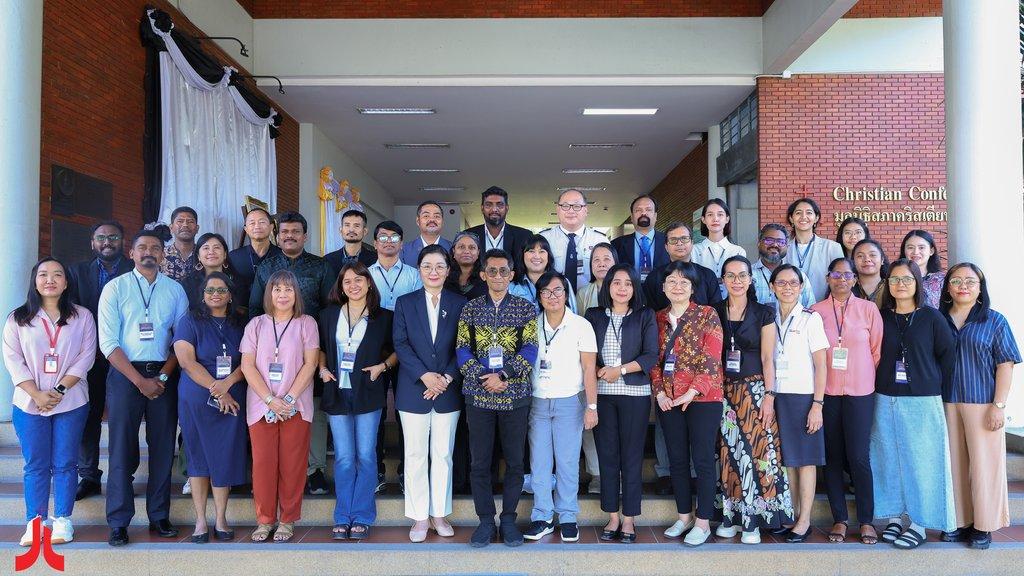
Participants of the International Consultation on Strengthening Responses to Child Trafficking in Asia 2026
Chiang Mai, Thailand: The International Consultation on Strengthening Responses to Child Trafficking in Asia commenced on 21 October 2026 at the Christian Conference of Asia (CCA) headquarters in Chiang Mai, bringing together more than 30 participants representing CCA member churches and councils, ecumenical organisations, child protection practitioners, and partner agencies.
Taking place from 20 to 23 October 2026, the consultation provides a platform for Asian churches and ecumenical partners to deepen their understanding of emerging trends and challenges in child trafficking, share effective practices from different Asian contexts, and strengthen collaborative responses to this serious child protection concern.
Welcoming participants, CCA General Secretary Rev. Jung Eun Grace Moon highlighted the importance of the consultation as an opportunity to deepen shared responsibility and consider how collective concern can be translated into more effective, coordinated, and sustained action to address child trafficking.
Rev. Moon also delivered the thematic address, “The Church’s Calling in Addressing Child Trafficking and Exploitation,” on the first day of the international consultation.
The CCA General Secretary called on churches across Asia to strengthen their commitment to preventing child trafficking and exploitation, emphasising that every child has inherent dignity and the right to live free from violence, abuse and exploitation. Drawing on biblical narratives and the UN Convention on the Rights of the Child, she challenged churches to see children who are often overlooked, listen to their voices and ensure their experiences are taken seriously. “A child does not exist to serve an adult’s ambition, an institution’s needs, or a household’s economic survival,” she emphasised.
Rev. Moon stressed that the Church’s responsibility must extend beyond compassion and awareness to concrete and accountable action. She called for stronger child safeguarding policies and reporting mechanisms within churches, greater support for vulnerable children and families, improved digital safety awareness, and stronger advocacy for children’s rights. She also urged churches to work collaboratively with governments, civil society organisations and specialist service providers, recognising that effective protection requires shared responsibility and expertise.
Affirming that children are not merely the future of the Church but valued members of communities today, Rev. Moon challenged Christian leaders to examine how power is exercised, how concerns are addressed and whether institutional practices consistently prioritise children’s safety and best interests. “Will we protect the structures that make people vulnerable, or will we stand alongside those whom those structures harm?”, she asked.
Rev. Moon stressed that protecting children is not only a social responsibility but an essential expression of Christian faith, justice and love, calling on churches to become communities where every child is seen, heard, valued and protected.
Over the course of the three-day consultation, participants will examine key trends and underlying factors related to child trafficking in Asia. Discussions will explore the links between migration, displacement and trafficking risks; the role of digital technology in online exploitation and child protection; and approaches to supporting the mental health and well-being of children affected by exploitation. Participants will also consider ways to strengthen churches’ capacity to prevent trafficking, enhance safeguarding and response mechanisms, and advance ecumenical advocacy for child protection.