Ecumenical cooperation and collective action key to the Church’s response to child trafficking, speakers affirm at CCA Consultation
Chiang Mai, Thailand: Church leaders, social workers and advocates from across Asia called for stronger safeguarding, practical action and ecumenical cooperation to protect children from trafficking and exploitation during the Christian Conference of Asia’s (CCA) International Consultation on Strengthening Responses to Child Trafficking in Asia.
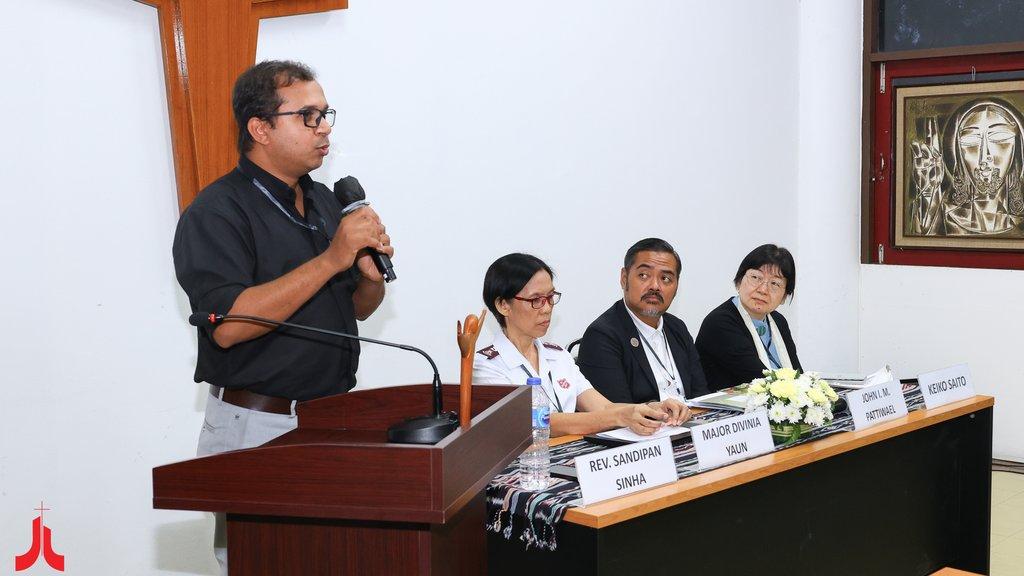
Panellists of “Ecumenical Advocacy for Child Protection and the Prevention of Trafficking"
Chiang Mai, Thailand: Church leaders, social workers and advocates from across Asia called for stronger safeguarding, practical action and ecumenical cooperation to protect children from trafficking and exploitation during the Christian Conference of Asia’s (CCA) International Consultation on Strengthening Responses to Child Trafficking in Asia.
During a panel discussion on “Ecumenical Advocacy for Child Protection and the Prevention of Trafficking,” panellists emphasised that the Church’s responsibility must extend beyond preaching and awareness-raising to include prevention, survivor support and accountability.
Rev. Sandipan Sinha, Interim Coordinator for the Anti-Human Trafficking Project and Children’s Ministry, highlighted the Church of North India’s Diocese of Durgapur’s work since 2011 to support marginalised communities in West Bengal through shelter, education, awareness campaigns and livelihood initiatives. Working primarily in South and North Dinajpur, the Diocese addresses vulnerabilities linked to poverty, gender-based discrimination and the marginalisation of Dalit and tribal communities.
Rev. Sinha highlighted St. Michael Safe Home in Malda, which provides shelter, care and educational opportunities up to Class XII for girls who have experienced trafficking or are at risk of being trafficked. The Diocese also identifies vulnerable families and promotes alternative livelihoods, including bamboo craft, tailoring and spice-making, to strengthen economic independence.
He stressed that cooperation among the Church, government agencies and local communities is essential to preventing trafficking, identifying families at risk and supporting survivors.
Major Divinia Yaun of the Salvation Army, Philippines, representing the National Council of Churches in the Philippines (NCCP), emphasised that child protection awareness must translate into practical action. She highlighted how NCCP member churches advance child protection through training, advocacy and community engagement, equipping leaders, families and communities to uphold children’s rights and respond to risks of abuse, exploitation and trafficking.
Drawing on experiences involving children affected by trafficking, child labour and sexual abuse, Major Yaun called for effective safeguarding policies, clear reporting procedures and accountability. She stressed the importance of listening to children without blame or judgement and ensuring that clergy, staff and volunteers receive regular training. Her recommendations also included educating children, parents and communities about child rights, abuse prevention and digital safety, as well as strengthening referral networks with child protection professionals, civil society organisations, schools and government agencies.
Major Yaun reiterated the importance of ecumenical cooperation, noting that no single church can address every risk alone.
Keiko Saito, Secretary of the Japan Christian Women’s Organisation (Kyofukai), highlighted the organisation’s longstanding commitment to protecting the human rights and welfare of women and children. Established in 1886, Kyofukai works to address sexual exploitation and trafficking. Ms Saito shared how witnessing a possible case of a young girl being trafficked from northeastern Thailand during her youth became a catalyst for her lifelong work against the sexual exploitation of children in Japan.
She highlighted Kyofukai’s collaboration with the Japan Network Against Trafficking in Persons (JNATIP) to raise awareness, strengthen networks and engage policymakers and government officials. However, limited funding and reliance on volunteers remain significant challenges.
Ms Saito also drew attention to the stigma faced by sexually exploited children, noting that the misconception that children bear responsibility for their exploitation can prevent them from seeking help and shield perpetrators from accountability. She emphasised that sharing experiences and strengthening collaboration among organisations are vital to advancing advocacy and improving responses to trafficking and exploitation.
Indonesian lawyer, mediator and human rights advocate John Izaac Minotty Pattiwael, a member of the Protestant Church in Western Indonesia (GPIB) and former Coordinator of CCA’s Asia Advocacy Network on Dignity and Rights of Children (AANDRoC), highlighted gaps in international and national responses to child trafficking. He noted that while the Palermo Protocol establishes a framework for preventing trafficking, protecting victims and prosecuting offenders, its limitations include insufficient emphasis on prevention and limited accountability mechanisms.
Mr Pattiwael outlined forms of child exploitation, including sexual exploitation, forced labour, illegal adoption and forced begging. He also raised concerns about weak law enforcement, corruption and inadequate coordination. Highlighting GPIB’s safeguarding initiatives, he cited congregational awareness programmes, specialised task forces, training, safe shelters and access to psychological and legal counselling. He stressed that survivor support must extend beyond investigations to include long-term rehabilitation and psychological recovery.
Reflecting on the concept of ecclesia domestica, or the family as the domestic church, Mr Pattiwael challenged churches to examine their responsibility when families fail to protect children or become sites of abuse and exploitation. He called on the Church to respond through practical assistance, compassionate care and sustained support that restores survivors’ dignity and offers hope.
Across their presentations, the panellists underscored that protecting children requires more than isolated interventions. Effective safeguarding, community awareness, survivor-centred care and cooperation among churches, governments, civil society and local communities are essential to preventing trafficking and ensuring that children can access the protection and support they need.
Rev. Irma Balaba of the United Church of Christ in the Philippines led the morning prayer on the third day of the consultation, calling on churches to protect children, support survivors and challenge the systems that enable exploitation. Reflecting on Jesus’ mission to comfort those who suffer and confront the injustices that cause suffering, she urged churches to strengthen prevention, uphold children’s rights and dignity, listen to their voices and advocate for justice. She also emphasised the importance of ecumenical solidarity and cross-border partnerships in addressing child trafficking and strengthening protection across Asia.
Photo Gallery: International Consultation on Strengthening Responses to Child Trafficking in Asia