EWAAV Southeast Asia Consultation affirms women’s dignity and rights as integral to Christian witness and ecumenical calling
Manila, Philippines: Participants in the Southeast Asia Consultation on Strengthening Ecumenical Action for Women’s Dignity and Rights, held in Manila, Philippines, from 14 to 16 October 2026, affirmed that upholding women’s dignity and rights is integral to Christian witness and the ecumenical calling to embody a faith that upholds justice, dignity, and the fullness of life for all.
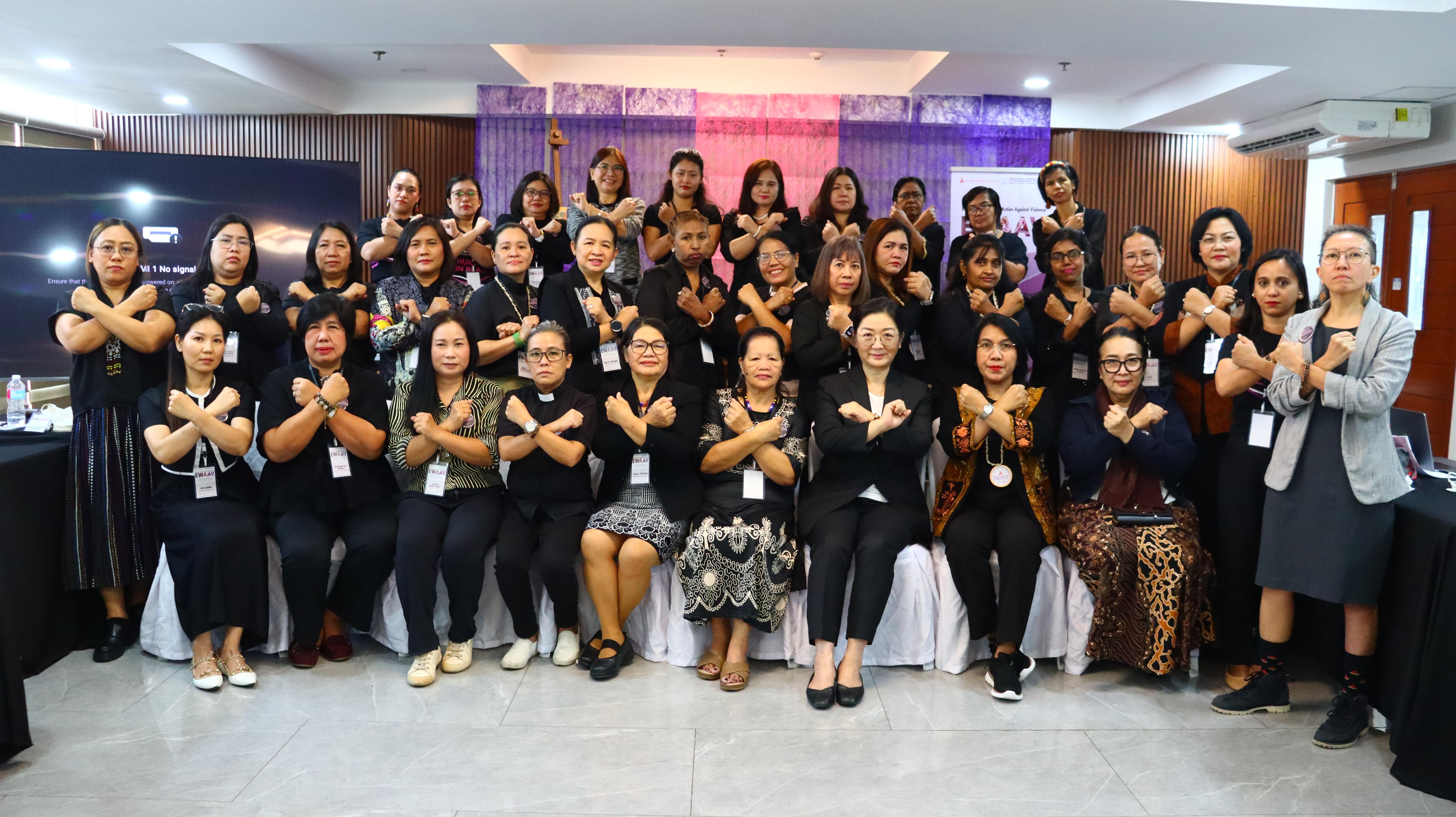
Participants of the consultation wear black on Thursday, 15 October 2026, in observance of #ThursdaysInBlack.
Manila, Philippines: Participants in the Southeast Asia Consultation on Strengthening Ecumenical Action for Women’s Dignity and Rights, held in Manila, Philippines, from 14 to 16 October 2026, affirmed that upholding women’s dignity and rights is integral to Christian witness and the ecumenical calling to embody a faith that upholds justice, dignity, and the fullness of life for all.
Organised by the Christian Conference of Asia (CCA), in collaboration with the National Council of Churches in the Philippines, as part of CCA’s Ecumenical Women’s Action Against Violence (EWAAV) programme, the consultation brought together 33 participants from churches and ecumenical organisations across Southeast Asia to deepen their understanding of the challenges confronting women, strengthen regional solidarity, and identify concrete strategies for collective action.
The consultation examined the interconnected challenges affecting women across the region, including low-paid work, unequal care burdens, landlessness, migration, gender-based violence, militarism, and political repression. Drawing on their respective contexts, participants reflected on how these persistent issues intersect with broader socio-economic, political, and environmental challenges, disproportionately affecting women and marginalised communities.
The sharing of lived experiences by an Indigenous woman and women migrant workers highlighted the systemic forms of violence and injustice confronting their communities and sectors. Their testimonies underscored the importance of listening to women whose voices and experiences are often marginalised, recognising their agency, and ensuring that advocacy and pastoral responses are grounded in the realities of their lives.
Particular emphasis was placed on deepening advocacy for women’s dignity and rights through contextual biblical reflection and a workshop on developing advocacy strategies. Drawing on the realities of their respective contexts, participants developed relevant advocacy strategies and identified priority areas for action within their churches, councils, and organisations. These advocacy strategies aim to strengthen institutional responses, promote women’s leadership and participation, and advance collective efforts to address the injustices affecting women across the region.
The participants’ shared commitment to addressing the urgent and interconnected challenges confronting women was articulated in a communique, which outlines concrete actions to promote women’s dignity and rights and translate their Christian witness into meaningful efforts to uphold women’s dignity, rights, and leadership.
Participants emphasised the need to expand opportunities within and beyond church structures to advance gender justice and strengthen women’s meaningful participation in the church and wider society. Their commitments centre on the prophetic call to speak and act boldly against gender-based violence, exploitation, and discrimination; promote accessible and inclusive education, raise awareness, and build capacity to empower women and children, strengthen women’s leadership and participation in decision-making and equip communities to address social and environmental challenges; foster solidarity among churches, women’s organisations, civil society, and affected communities across borders and generations; and sustain collective action through advocacy, mutual learning, and collaboration.