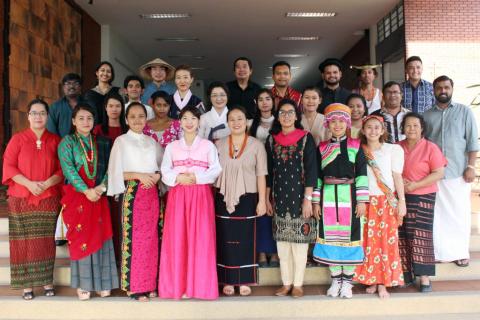
CCA will be organizing Asian Ecumenical Courses (AEC) through its Asian Ecumenical Institute, with an aim to provide ecumenical formation for participants selected from CCA member churches and councils. The contents and methodologies of the course are designed to make it more relevant in a contemporary context. The intensive training course is based on the premise that, even though an ecumenical dimension should permeate all theological formation courses and training by all denominations, it is of particular importance that a course in ecumenism be given in an appropriate ecumenical platform through a month-long living in experience of learning, reflecting, participating in spiritual life and understanding the emerging realities and identifying the ways of developing ecumenical responses contextually. Various topics related to ecumenism and the ecumenical movement will be the focus of the AEI which will aim at nurturing ecumenical formation of younger generation at the national, regional as well as at the grassroots level.
The total duration of the program will be for a period of one month. The course has four components namely: (a) analysis of Asian realities, (b) ecumenical vision based on biblical and theological reflections, (c) community building, and (d) leadership training. These four components intertwine to provide the atmosphere and direction for the participants of the AEI to plant the seeds of wider ecumenical vision in their ministries and to empower them as ecumenical leaders in Asia. Through interaction with one another in a setting of common worship, bible study, social analysis and theological reflection, ecumenical leadership in the Asian churches can be renewed and strengthened with greater clarity and commitment to a common ecumenical vision and the role of the Christian community in the service of that vision in Asia.
The course outline of AEI also will include the “institutional” aspect and the contemporary ecumenism and ecumenical movement, responses of various Christian Communities, doctrinal tendencies and hindrances of ecumenism, the real causes of separations, nurturing ecumenical spirituality and learning from different forms of worship and liturgical traditions the role of the laity and in particular of women in the Church and ecumenical movement as change makers in ecumenical movement. The AEI will also have a strong emphasis of lay leadership development.
Towards this direction, the AEI will aim to develop the ecumenical formation of a pool of young church and prospective ecumenical leaders in Asia, especially from among men and women, laity, youth, clergy and seminary students who are committed to the ecumenical values; facilitating the potentials of church leaders with ecumenical theological insights with a wider ecumenical vision, living in community experiences, tools of analysis of Asian reality and leadership skills. In order to enhance their capacity to respond effectively to contemporary ecumenical challenges. The AEI will be organized annually at different countries jointly with the ACISCA member institutions. Spiritual emphasis of ecumenism, especially the significance of prayer for unity and other forms of tending towards the unity will be the specific part of the AEI.